Founding florist
Tulipanna
Bondi NSW · est. 1992
A Bondi Road florist since 1992, with seasonal bouquets, arrangements, roses and potted orchids, and a weekly note on what's at market.
Seasonal cut flowerHelianthus annuus
Sunflowers are in season in Australia from December to March.Being confirmed
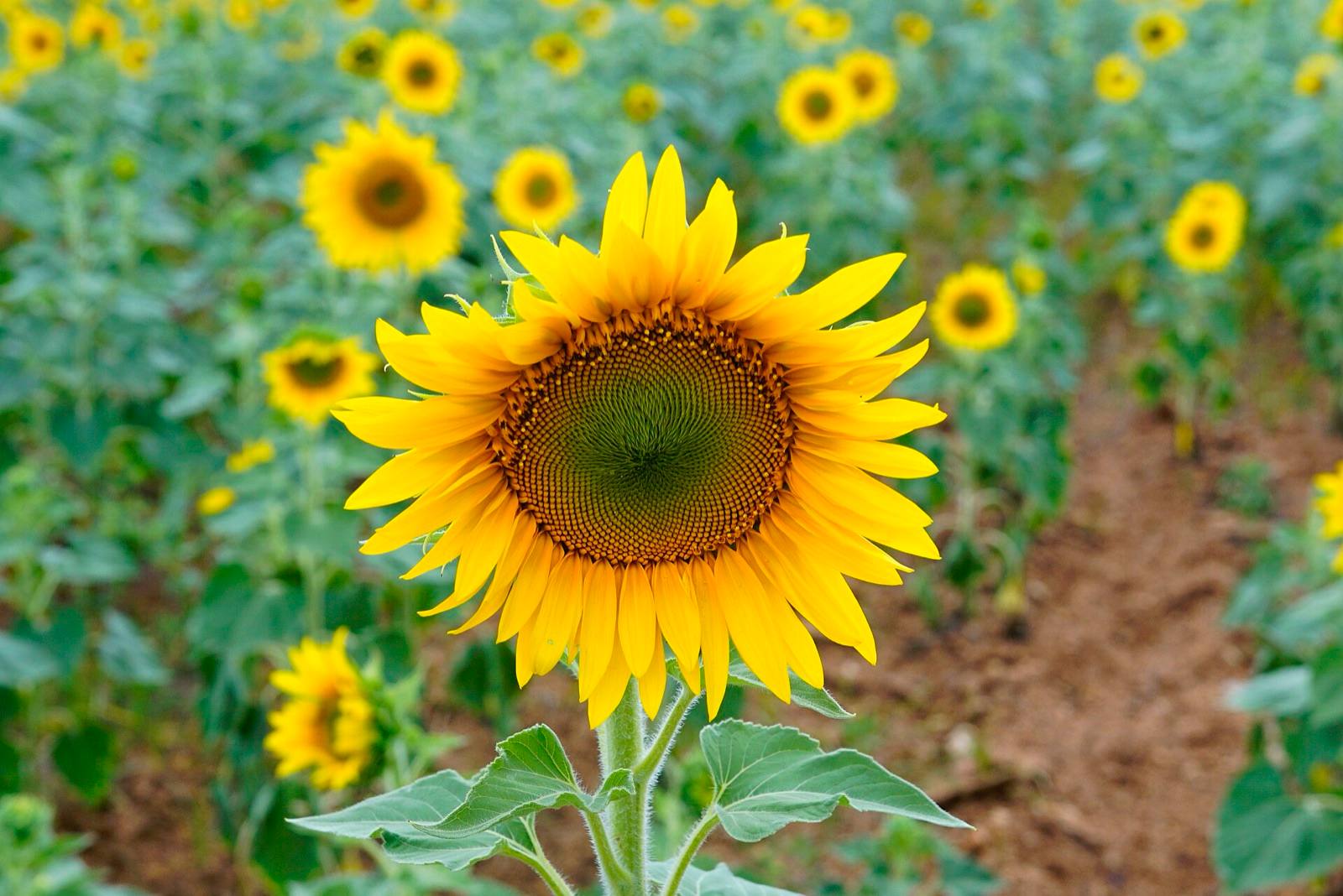
Sunflowers are a summer flower in Australia, at market from about December to March, with January the peak. Melbourne florists source many from Sunraysia and around Mildura, and glasshouse crops stretch availability over much of the year. Summer sunflower fields in regional Victoria and Queensland draw big crowds, usually for only a few weeks each year. Beyond classic yellow they come in lemon, bronze and red, plus fluffy Teddy Bear types.
Sold by the stem or bunch. Cheapest in high summer. Being confirmed
Turn the head over and look at the back. The green bracts should be firm and fresh, not dry or curling, and the stem should be thick enough not to wobble. Heads with the petals just lifting clear of the centre give you the longest run. Skip any with brown-edged petals or pollen dusting the bucket, which suggests they were cut days ago. Pollen-free varieties such as ProCut and Sunrich are cleaner for the house. Three to five big heads fill a heavy vase, and a bunch of ten suits a bucket or big jug. January, the peak of the season, is the best time for value.
Bondi NSW · est. 1992
A Bondi Road florist since 1992, with seasonal bouquets, arrangements, roses and potted orchids, and a weekly note on what's at market.
Sunflowers are not native to Australia, but they're grown here commercially.
Cut sunflowers are mostly field-grown in summer, sown in batches every week or two so there are fresh heads over several months. Much of Melbourne's supply comes from the Sunraysia district around Mildura, where hot days and irrigation suit them. Market gardens and small flower farms near the capitals grow them too, and glasshouse growers produce smaller numbers outside summer. They are a different crop from the oilseed sunflowers grown on the Darling Downs and in northern NSW, which are bred for seed rather than long, clean stems. Being confirmed
Stems at Australian markets are mostly grown here, so when they are out of season they are hard to find. Being confirmed
Colours
Varieties to ask for
Vase life
7 to 10 days Being confirmed
Making them last
Summer gives sunflowers plenty of company: hydrangeas, lisianthus, dahlias from January and blue delphiniums early in the season. Eucalyptus adds a grey-green backdrop. Use a tall, heavy vase or a stoneware jug, and cut some stems shorter so the heads sit at different heights. Over the vase life the petals droop and curl before the centre changes, so pull off tired petals and enjoy the seed head. Spent heads dry well: strip the petals, hang them face down somewhere airy and dry, and use them in wreaths or leave them out for the birds.
Traditionally a symbol of adoration and loyalty.
Greendale
Open: MarchBeing confirmed
Bemboka
Open: AprilBeing confirmed
Lilyvale
Open: not yet confirmedBeing confirmed
Flowerdale
Open: January to AprilBeing confirmed
Flemington
Best: all yearBeing confirmed
Epping
Best: all yearBeing confirmed
Sunflowers are at Australian markets from about December to March, peaking in January. Many Melbourne stems come from Sunraysia and around Mildura, and glasshouse growers supply smaller numbers most of the year.
Sunflower fields open to visitors in summer in regional Victoria and south-east Queensland, including farms near Toowoomba. Fields are usually at their best for only two or three weeks, so check the farm's updates before you go.
Around seven to ten days. Strip most of the leaves, use a heavy vase with plenty of water and top it up daily, as the big heads are thirsty.
The ASPCA lists sunflowers as non-toxic to cats and dogs, which makes them one of the safer choices for a house with pets. Eating a lot of any plant material can still cause a mild upset stomach, so keep the vase where pets can't chew the leaves. Other flowers in a mixed bunch may not be as safe.
Yes, easily. Sow seed straight into the ground from October to December, once the soil has warmed and frost has passed, in the sunniest spot you have. Most cut-flower varieties bloom in about two to three months. Tall types need a stake against Melbourne's gusty northerlies. Sow a few seeds every couple of weeks for a longer run of flowers.